dietary consequence. In years past, it
was rare to see more than two or three
spoonbills at one time. On several
occasions in recent years, groups of up
to 10 spoonbills were observed along
the berm.
Next to the roseate spoonbill, the
wood stork probably gets the most
attention. The wood stork is the
only true stork native to the United
States. It is common to see a dozen or
more wood storks moving their long,
pointed bills back and forth in the
water searching for food. When the
wood stork senses the presence of food,
it snaps its bill in one of the fastest
reflexes in nature. The wood stork is an
endangered bird in the United States.
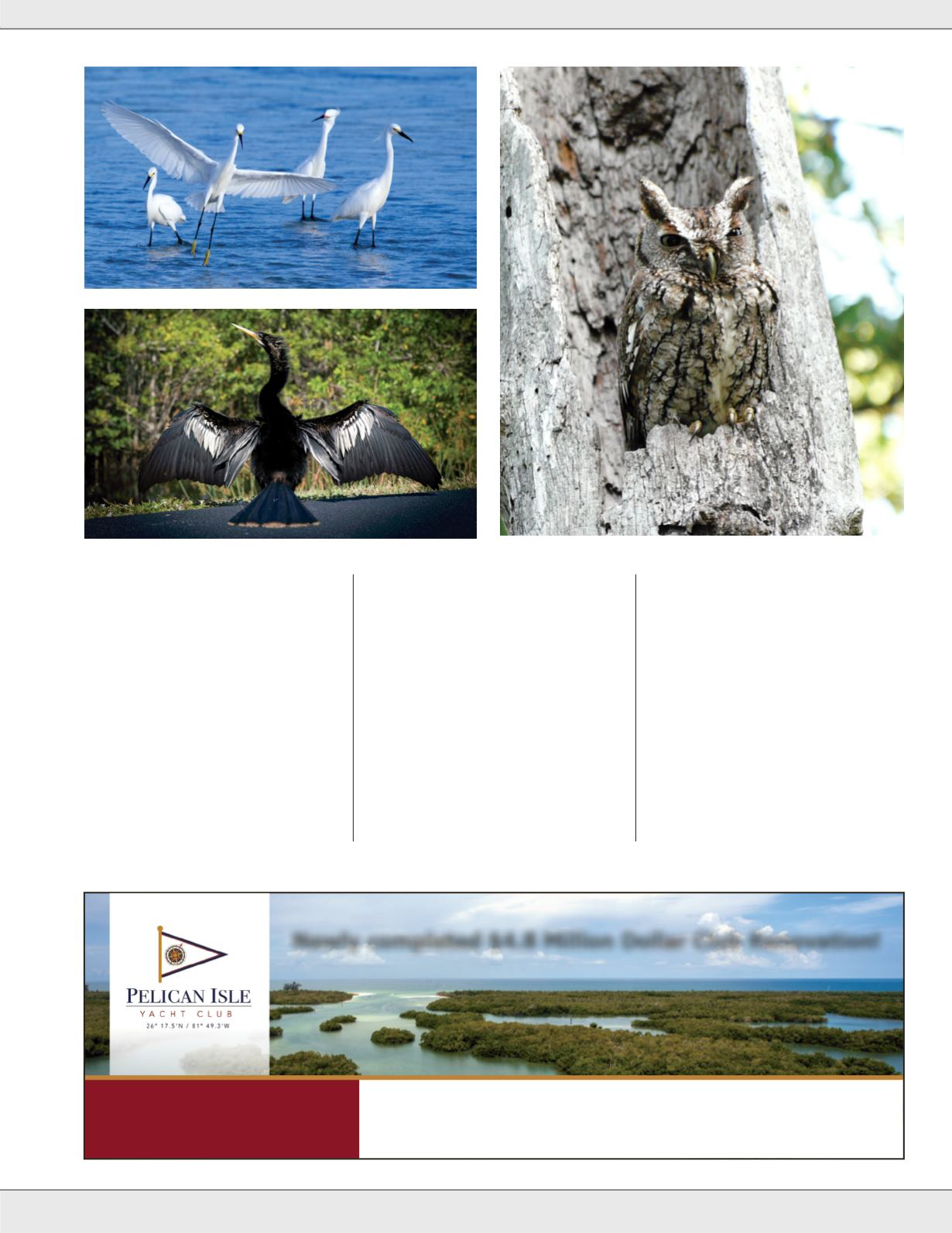
Beyond the spoonbills and wood
storks, walkers on the berm in Pelican
Bay are likely to encounter anhinga,
bald eagles, black vultures, black-
crowned night herons, boat-tailed
grackles, brown pelicans, cattle egrets,
common moorhens, and many other
species of birds.
It is also possible to see snakes,
lizards, raccoons, bobcats, otters,
squirrels, foxes, numerous species of
butterflies and other types of fauna
when walking along our berm.
MANGROVES
Being located so close to the Gulf of
Mexico, residents of Pelican Bay enjoy
protection from very high and very
low temperatures. The Gulf of Mexico
at this latitude rarely gets above 90
degrees and rarely drops below 60
Newly completed $4.8 Million Dollar Club Renovation!
190 boat slip Marina with wet & dry slips available for Members!
Hourly Beach Shuttle and full resort amenities located on our private island
paradise just five minutes from Wiggins Pass & award winning beaches!
If you are interested in application
or more information – please visit
us online at
!
91
Pelican Bay Member Guide 2018
PelicanBay.org


